
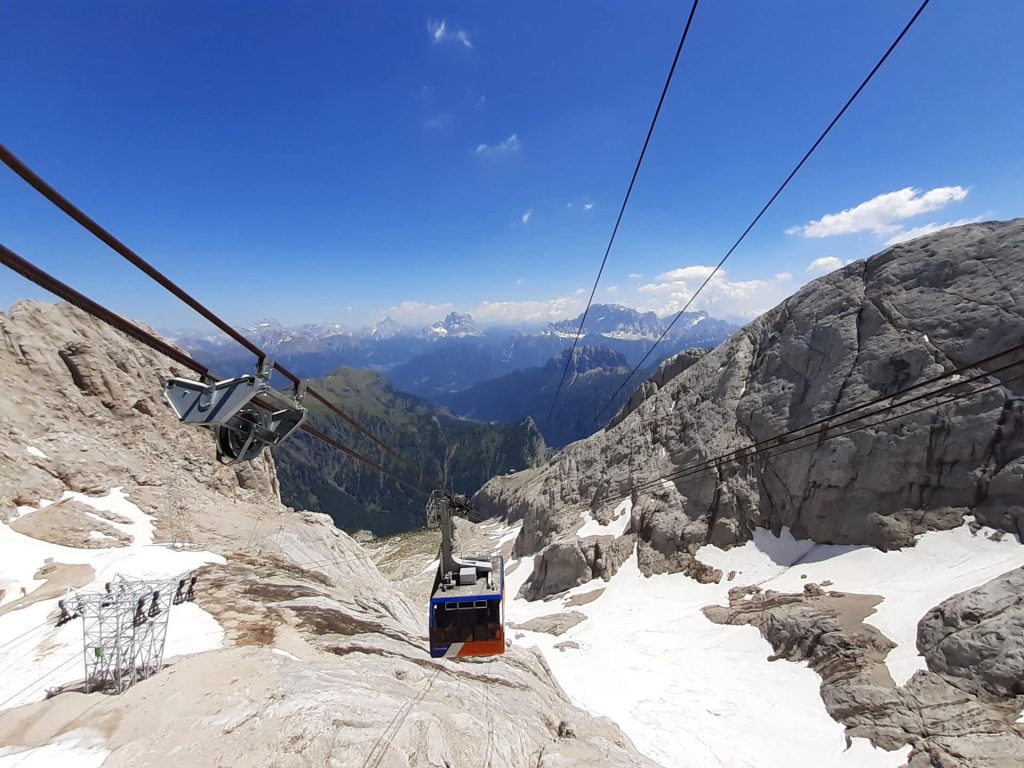
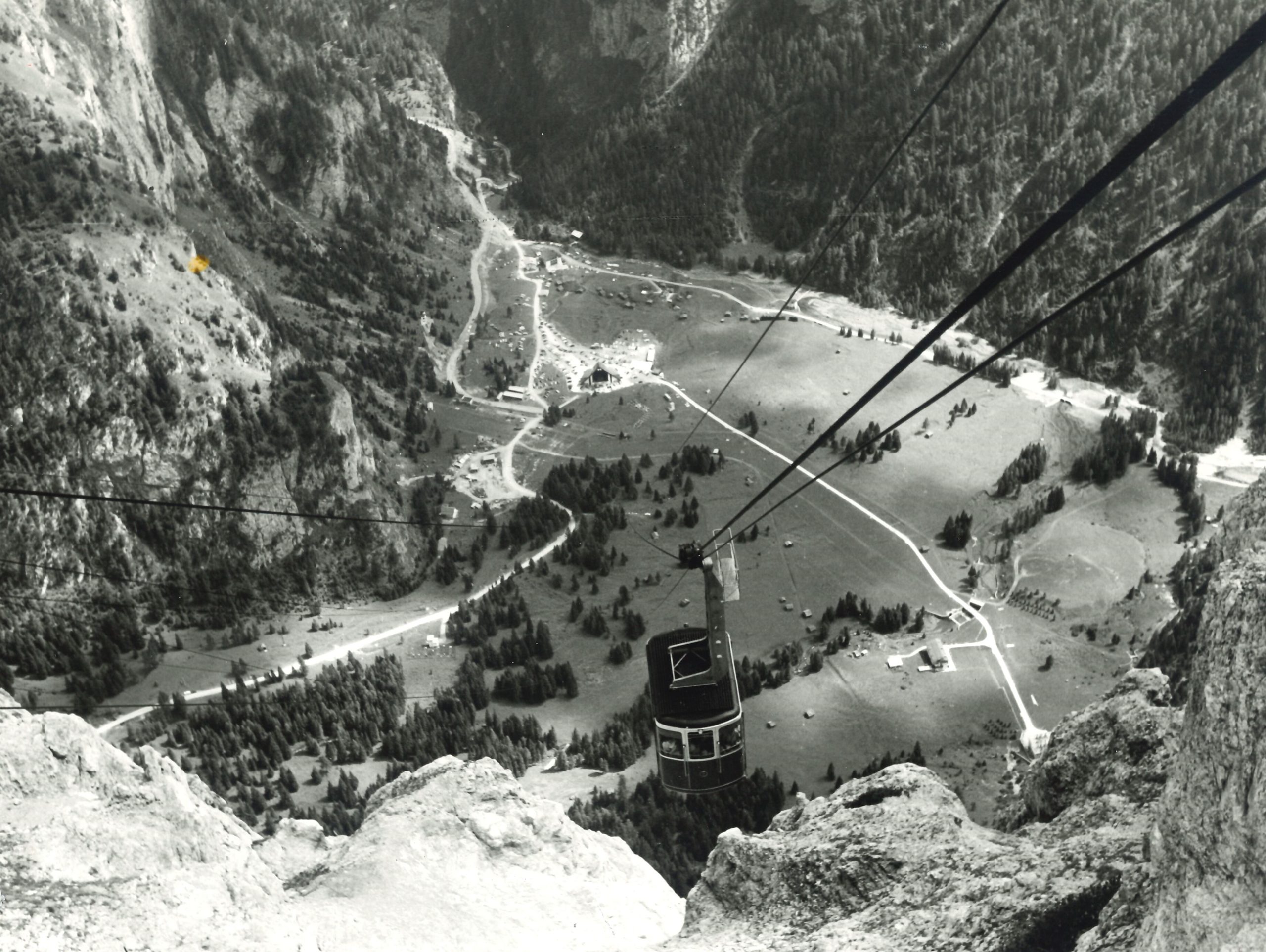
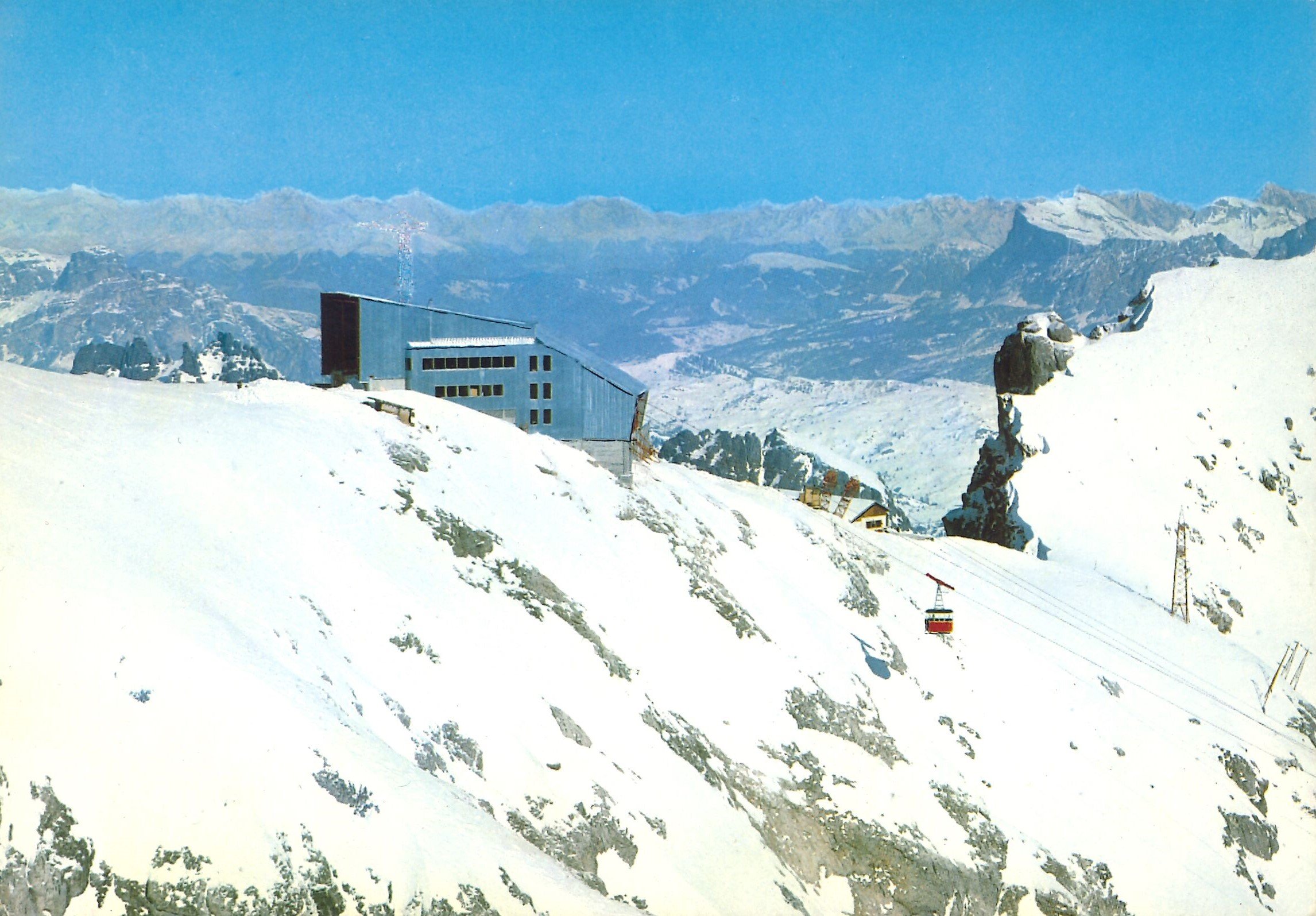
The Marmolada cable car starts from Malga Ciapèla, on the Belluno side, and reaches Punta Rocca at 3,265 metres in about 12 minutes. The route is divided into three sections, passing through Coston d’Antermoja, where you change cabin, and stopping at the intermediate station of Serauta.
From the top station you can admire Punta Penia which, at 3,343 metres, is the highest peak in the Dolomites.
from the design to the first opening
Design of the lifts began in 1963, with a planned capacity of 400 people per hour.
The first two sections, from Malga Ciapèla to Serauta, opened to the public on 8 December 1967.
Reaching Punta Rocca and the ski connections
In 1970 the third section up to Punta Rocca was completed. Between 1971 and 1974 ski lifts and chairlifts were built; in 1982 the Marmolada was connected to the Sellaronda circuit and to Dolomiti Superski.
Upgrading the lifts and the terrace
In 2004–2005 the three sections of the cable car were upgraded, bringing capacity to about 1,000 people per hour. In 2010 the Punta Rocca panoramic terrace was built; in 2011 the restaurant at Serauta station was renovated.
New spaces for visitors
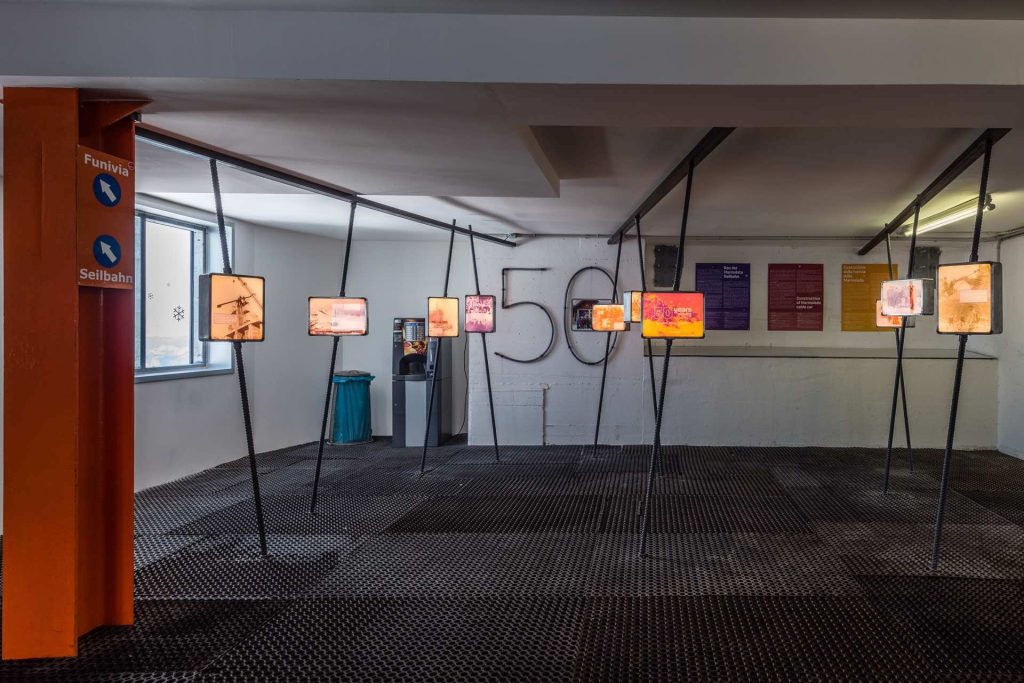
In 2014 the Bar Funivia at the Malga Ciapèla base station was renovated. The following year the new Marmolada Great War Museum 3000 m, enlarged and completely renewed, opened at Serauta. In 2017–2018 Punta Rocca station was also renovated, with two new lifts and a photo exhibition dedicated to the first 50 years of the cable car.
La Marmolada era una montagna che si guardava dal basso.
Lo è stata fino a metà Ottocento, quando Paul Grohmann raggiunse per primo Punta Penia con le guide alpine Angelo e Fulgenzio Dimai, il 28 settembre 1864. Due anni prima aveva conquistato Punta Rocca insieme a Pellegrino Pellegrini, guida alpina di Rocca Pietore.
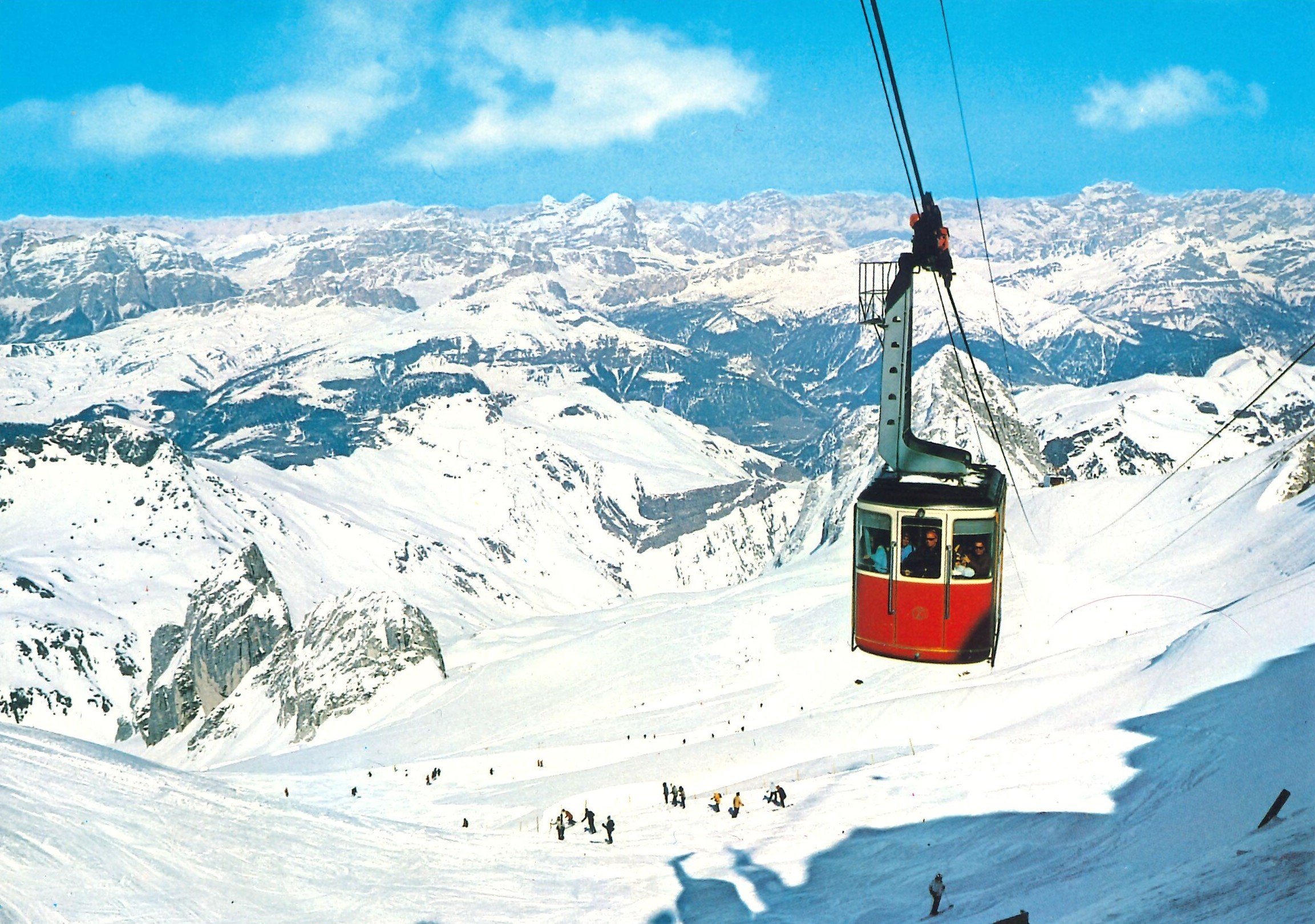
Then mountaineering gave way to war — a war fought above and below the glacier. And when peace returned, so did tourism: many people began climbing up the glacier side to ski.
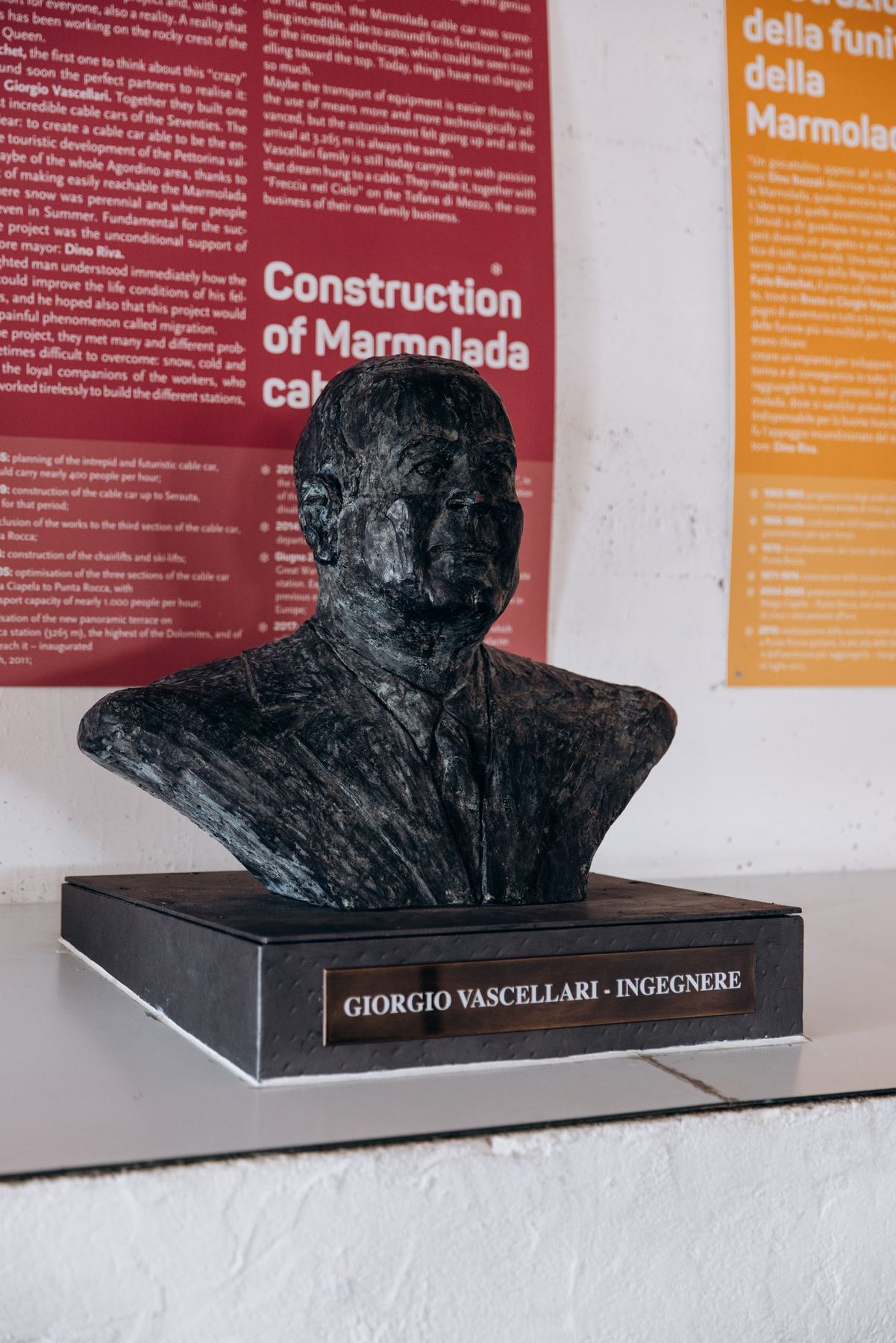
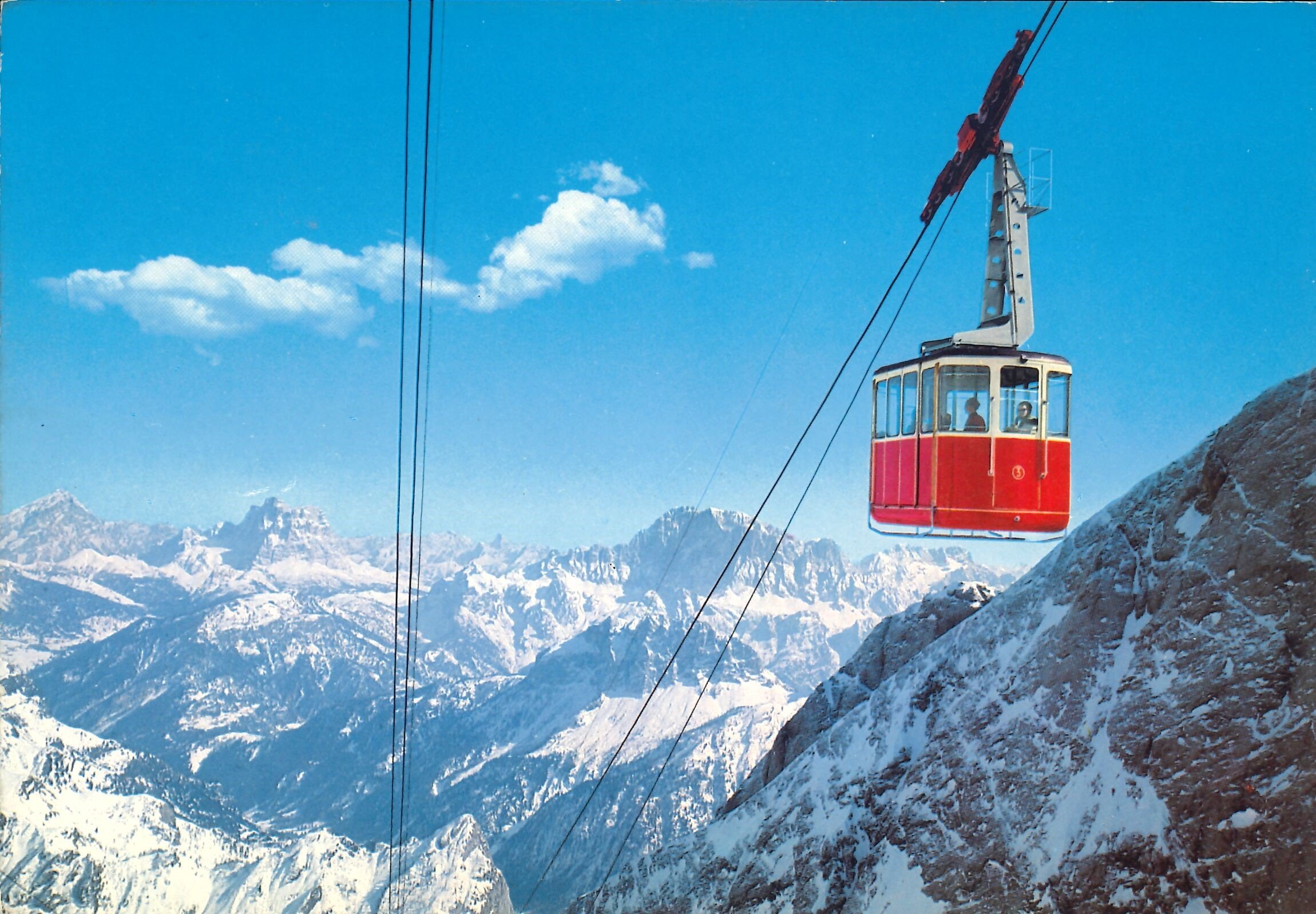
In the early 1960s Furio Bianchet, a mountain lover ahead of his time, had an idea that changed the fortunes of the Val Pettorina: a cable car that would take even the least skilled climber to the summit, where only eagles could go.
The idea immediately appealed to the local authorities and to the people, who saw the cable car as a way out of poverty and almost forced emigration: until then farming had been the only source of livelihood for the whole Agordino area.
Funding was missing, and it came from the Vascellari family, who still run the lift today. Valentino, Bruno and Giorgio supported Bianchet’s project from the start, convinced it would improve life in the whole valley.
Construction was anything but easy — the terrain, bad weather, metres and metres of snow — but on 30 July 1967 the machines were started for the first time.